Letters to Your One-Year-Old: A Keepsake for When They're Eighteen
Write a letter to your one-year-old today and save it for their 18th birthday. Get prompts, examples, and a simple keepsake plan.
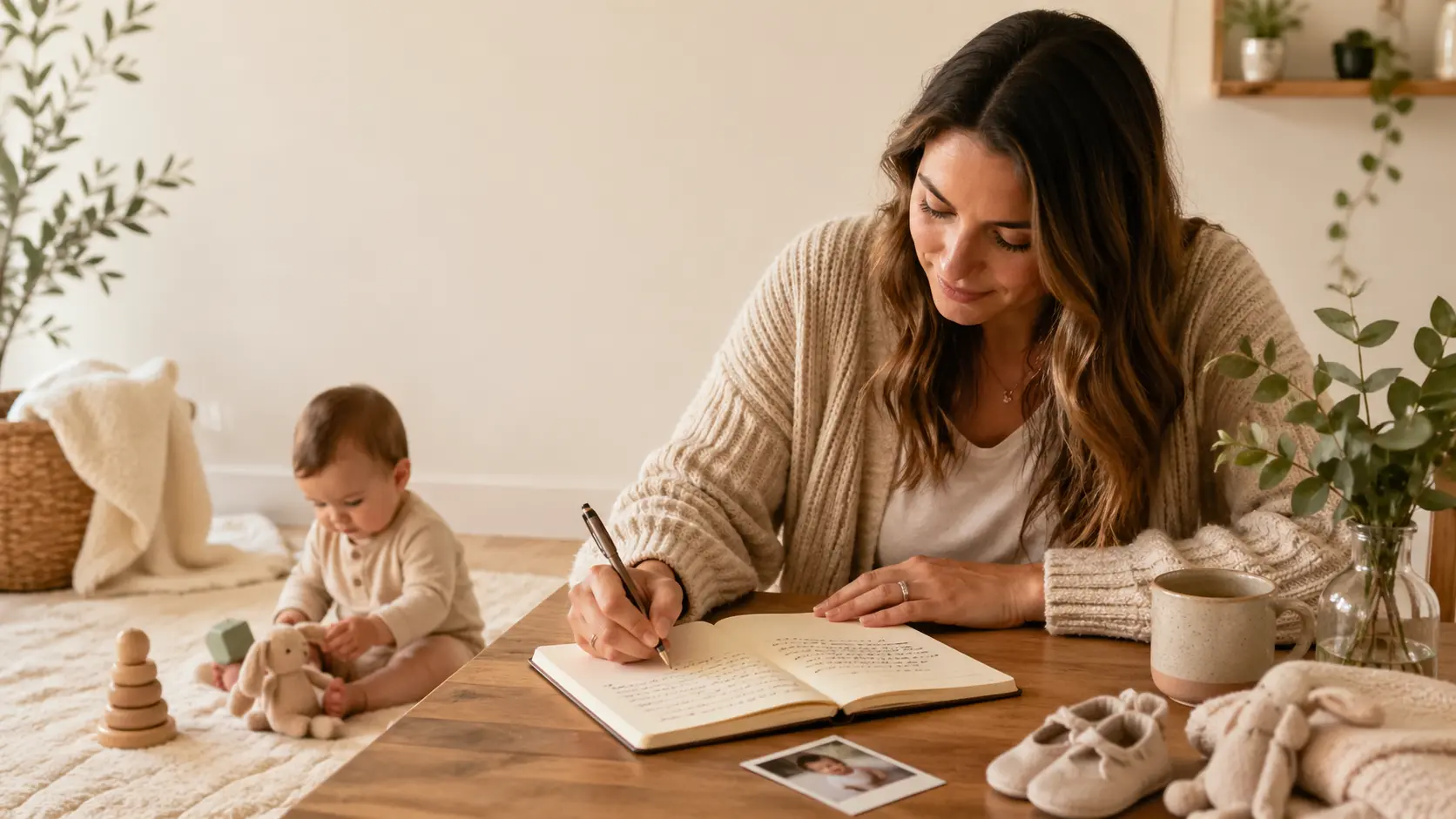
The first birthday changes the way memory feels. Twelve months is enough time for a baby to become familiar and still new, enough time for routines to form, and not nearly enough time for a parent to feel caught up with all of it.
That is why letters to your one-year-old can matter so much. They give the year a shape. They keep the small, specific things that are easiest to lose: the way they reach for your face, the foods they trust, the noises that make them laugh, and the little habits that already feel ordinary even though they will not stay ordinary for long.
Think of it as a family time capsule with a voice attached. The Smithsonian's Museum Conservation Institute describes time capsules as things prepared now for a future opening, and that idea fits this kind of letter well. You are not just saving content. You are saving the feeling of being here, at this stage, with this child, right now.
If you want the letter to arrive on their eighteenth birthday, it needs to wait for seventeen years. Preserly's Legacy capsule is the plan that fits that date: it costs €89 or US$99 as a one-time payment, depending on the currency you choose at checkout, with no subscription, and can be scheduled up to 25 years ahead. It includes 10 GB for your letter, photos, audio, video, and documents; up to 25 recipients; up to five collaborators; and delivery by email, SMS, or WhatsApp. Start your eighteenth-birthday capsule when you are ready to give the letter a date.
Why write a letter at one year old?
The first birthday is not only a celebration. It is a snapshot. At twelve months, babies are changing fast enough that a parent can feel like they are meeting a new person every few weeks. The American Academy of Pediatrics notes that babies around this age are reaching clear developmental milestones in movement, language, and social awareness AAP milestones. That is exactly what makes the moment worth preserving.
Writing now matters because the details are still fresh. You know what they laugh at. You know how they reach for you when they are tired. You know the little routine that calms them before bed. You know the version of parenthood that you are living right now, before memory starts sanding down the edges.
If you want a practical list before you begin, these first birthday time capsule ideas can help you choose a few details worth keeping without turning the day into another project.
There is also something emotionally useful about writing to a child who cannot read it yet. It removes the pressure to be perfect. You do not need to make the letter literary. You only need to make it honest. A few true sentences from one year of life will mean more than a polished paragraph that could apply to any child.
What to include in a letter to your one-year-old
Start with the facts of the year. What is their favorite sound? What food do they always reach for first? What is their funniest habit? What do they do when they want comfort, and what do they do when they are excited?
Then move into the feelings behind those facts. Tell them what you learned from them. Tell them what surprised you. Tell them how they changed your days, your sleep, your patience, your sense of time, and your understanding of love. This is often the part parents remember most when they read an old letter back later.
If you want the letter to feel complete without becoming heavy, include three things:
- What life looked like at one year old.
- What you hope for them.
- What you want them to remember about being loved.
That structure keeps the letter grounded. It also helps if you are the kind of person who freezes when faced with a blank page.
Simple writing prompts when you do not know what to say
If you are stuck, begin with a sentence that gives you direction.
You could write:
- "This year, you taught me..."
- "When I think about your first year, I always remember..."
- "The thing I want you to know most is..."
- "At one year old, your favorite things are..."
- "If you could see yourself right now, you would laugh at..."
- "When you read this at eighteen, I hope you understand..."
Prompts work because they lower the stakes. They give you a path into the letter without requiring that you know exactly where it is going. Often the honest first sentence opens the rest of the page.
For more gentle starting points, try these ideas for letters to your baby during the first year. You only need one prompt that sounds like you.
Start with one memory now
Choose one prompt above and add one photo from this week. Save them in a free Echo capsule for your child, or plan to open it together on a family day within the next two years. A shorter wait lets you try the ritual now without replacing the letter you are keeping for their eighteenth birthday.
Start a free Echo capsule, choose a delivery date within two years, and give that first memory a place to wait.
A simple structure you can follow
If you want the letter to feel clear and complete, use this three-part structure.
Opening
Begin by naming the moment. Say that you are writing on or around their first birthday. Mention why you are writing now, and say the one thing you most want them to know when they are older.
Middle
Use the middle to capture the life of the child as they are right now. Include their routines, preferences, milestones, and the small details that feel ordinary today but will feel miraculous later. This is where the letter becomes specific enough to matter.
Closing
End with reassurance. Tell them you will always love them. Tell them what you hope for their future. Tell them why you wanted them to have this letter at eighteen. The closing should feel calm, warm, and true.
A sample excerpt to help you get started
Here is a short example of the tone you might use:
Dear you,
You are one year old today, and somehow the last twelve months feel both tiny and enormous. You have the loudest laugh, the fastest crawl, and the funniest way of looking at me like I am the most important person in the room. I hope that when you read this, you can feel how loved you were on the day I wrote it. I hope you know that even when I was tired, scared, or unsure, I never stopped being amazed that you are mine.
That does not need to be your exact wording. It only shows the balance to aim for: specific, tender, and plainspoken.
What your child will receive at eighteen
On the date you choose, your child receives the letter you wrote while the first year was still fresh. You can keep the capsule simple, or add a current photo, a voice note, a short video, and a few details that make the year feel real again. The point is not to hand them a huge archive. It is to let them meet the one-year-old they cannot remember and the parent you were at that moment.
Legacy covers the seventeen-year wait from the first birthday to the eighteenth. You choose the delivery date and recipients, add the memories that belong with the letter, and seal the capsule when it is ready. The €89 or US$99 payment is made once; it is not a yearly fee. Choose EUR or USD and review the total at checkout before paying. If another parent or close family member should add their voice, up to five people can contribute to the same capsule, and you can update recipients after sealing.
How to turn the letter into a keepsake that lasts
A letter becomes more powerful when it is preserved with intention.
If you are creating a digital capsule, keep the letter together with a few supporting memories: one current photo, a short voice note, a milestone note, or a tiny list of firsts from the year. Those details give the letter context later, when the child is old enough to see the full arc of the moment. Our guide to what to save from your baby's first months can help you keep the selection small and personal.
If you want to understand the mechanics of that process, see How it works. If you are still deciding whether a digital capsule is the right fit, the child-focused version of the experience starts here: Time Capsules for Your Child.
This is also where Preserly fits naturally. The goal is not to create more digital clutter. It is to have one calm place where the letter can wait, protected and easy to return to when the future date arrives. If you want to check the practical side before you begin, see Pricing. If trust matters most, read Our Promise.
When should you write it and when should it be opened?
The best time to write the letter is when the feelings are fresh, which is usually around the first birthday or soon after. The best time to open it is whatever milestone feels meaningful to your family.
Eighteen is a natural choice because it marks adulthood in many families. It is old enough to make the letter feel like a gift, not just a memory. But the real rule is simple: write it now, then choose a future date that matters to you.
Some families may prefer:
- age 16, when a child starts to see themselves more independently
- age 21, as a milestone of adulthood
- graduation, when the family is already thinking about the future
- a wedding day or another major life transition
There is no single correct answer. The important thing is that the date exists, because the date turns a letter into a promise.
What if you are not a sentimental person?
Then keep it practical.
Some of the strongest letters are not emotional at all in the obvious sense. They are observant. They tell the truth about a normal week, a difficult night, a favorite snack, and the small things that made life feel larger than it used to.
You do not need to be poetic. You only need to be specific enough that the future reader can feel the room you were standing in when you wrote it.
That is usually what makes these letters land. Not perfect language. Recognition.
FAQ
What do you write in a letter to a one-year-old?
Write about the baby they are right now, the year you have just lived together, and the hopes you have for their future. A good letter usually includes a few memories, a few personality details, and a few wishes.
Can I write this even if I am not a writer?
Yes. Simple language is often stronger here. If it sounds like you, it will probably be better than anything you try to polish.
Should I include photos or videos?
If you can, yes. A letter becomes richer when it is paired with a small set of memories from the same time period.
Why not just keep it in a notes app?
You can, but a dedicated capsule gives the letter a future date, a protected home, and a clearer sense of purpose.
The real gift
The real gift is not the paper, the photo, or the storage system. It is the fact that your child will one day get to hear who they were through your eyes.
At one year old, they will not understand the letter. That is the point. You are not writing for the version of them who is in the room today. You are writing for the teenager, the adult, the person who will want proof that they were loved before they could remember it.
If you want to make that promise feel real, write the letter now and give it a place to wait. Start a Legacy capsule, choose their eighteenth birthday, and keep this first year ready for the person they will become.